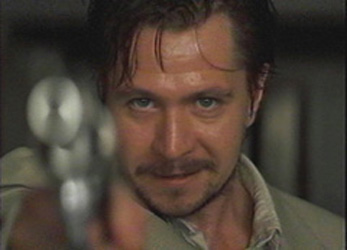
It's as simple as the title, films that have very prominent brother relationships at their core.
American History X (1998, dir. Tony Kaye)
Everyone remembers Edward Norton as the terrifying, swastika tattooed skinhead. The scene where he curbs a young black man who had broken into his house is gut wrenching. What's interesting is how he so embodies evil in the flashbacks during the film, yet is an incredibly sympathetic character when reformed. His younger brother, played by Edward Furlong, is high school student struggling to understand how his older brother has turned his back on their family's white power ways. In many ways the film is a race against time picture, Norton is desperately trying to get his little brother to stop being motivated through hate before something terrible happens to him.
Showing posts with label film festival. Show all posts
Thursday, July 15, 2010
Thursday, July 1, 2010
Hypothetical Film Festival - Unreliable Narrators
There's a very interesting plot device called the Unreliable Narrator, wherein the point of view you are getting the story from comes from a person who is possibly skewing the facts in their favor, creating a story that is not quite true. Here's some films that use that idea to great effect.
Rashomon (1950, dir. Akira Kurosawa)
Rashomon was the introduction of Kurosawa and post-war Japanese cinema to the world. The framing of the story was unlike anything that had really been seen in cinema, but had roots in older literature, particularly Shakespeare (whose works would be a major influence on Kurosawa throughout his career). A woodcutter and priest are seeking shelter in the husk of an old building while it storms outside. A passerby enters and they explain a strange murder of a samurai and the court case in which his wife, the bandit being accused, and the spirit of the samurai himself all testify. Through the three differing viewpoints we get three different pictures, with the added framing of these figures telling us the story. It's a like a hedge maze of narrative.
Rashomon (1950, dir. Akira Kurosawa)
Rashomon was the introduction of Kurosawa and post-war Japanese cinema to the world. The framing of the story was unlike anything that had really been seen in cinema, but had roots in older literature, particularly Shakespeare (whose works would be a major influence on Kurosawa throughout his career). A woodcutter and priest are seeking shelter in the husk of an old building while it storms outside. A passerby enters and they explain a strange murder of a samurai and the court case in which his wife, the bandit being accused, and the spirit of the samurai himself all testify. Through the three differing viewpoints we get three different pictures, with the added framing of these figures telling us the story. It's a like a hedge maze of narrative.
Labels:
1950s,
1980s,
2000s,
film festival,
hypothetical
Saturday, May 15, 2010
Hypothetical Film Festival - Ariana Birthday Edition!
So today is my beautiful girlfriend, Ariana's birthday. She is in Puerto Rico and myself in Nashville so it can be a little sad some times to have to wait and deal with overpriced airline tickets and saving up enough to live in the same place. That said, she has gotten a few creative birthday gifts from me recently (a solo D&D campaign designed for her, my class from student teaching wishing her happy birthday over the phone). Here is her third gift: a blog post devoted to her :D
Persepolis (2007, dir. Marjane Satrapi, Vincent Paronnaud)
This was the first film Ariana and I saw in the theater. She came up to visit in February of 2008. She had read the graphic novel the film was based on recently and by sheer lucky it was playing for a couple week at the Green Hills 16. It was a cloudy afternoon and, after stopping by Lipscomb, we walked over to the theater and saw it. Afterwards, it was dinner at Cheeseburger Charlie's and grabbing some groceries before heading home. In a lot of ways it was the first official "date" if you think of dates as consisting of things like a "dinner and a movie". The film is great, I think particularly because Satrapi was directly involved.
Persepolis (2007, dir. Marjane Satrapi, Vincent Paronnaud)
This was the first film Ariana and I saw in the theater. She came up to visit in February of 2008. She had read the graphic novel the film was based on recently and by sheer lucky it was playing for a couple week at the Green Hills 16. It was a cloudy afternoon and, after stopping by Lipscomb, we walked over to the theater and saw it. Afterwards, it was dinner at Cheeseburger Charlie's and grabbing some groceries before heading home. In a lot of ways it was the first official "date" if you think of dates as consisting of things like a "dinner and a movie". The film is great, I think particularly because Satrapi was directly involved.
Labels:
2010,
ariana,
birthday,
film festival,
hypothetical
Sunday, May 2, 2010
Hypothetical Film Festival - Best Horror Remakes Evrrrrrrrrrrr!
With the remake of Wes Craven's A Nightmare on Elm Street there is yet another horror film being "re-imagined" in theaters. But remaking horror flicks has been a mainstream trend since the 1960s and Hammer Studios buying up the Universal monsters. Here's a film festival devoted to movies I think are the best among horror remakes.
Nosferatu the Vampyre (1979, dir. Werner Herzog)
Starring Klaus Kinski, Isabelle Adjani, Bruno Ganz
Acclaimed German filmmaker Herzog decided to remake F.W. Murnau's vampire film, believing it to be the best film ever produced by a German director. The original silent Nosferatu was made as a result of the inability to get the right to the Dracula novel. Murnau makes a few tweaks, such a dehumanizing the title vampire lord even more. When Herzog's version came long Dracula was now in the public domain so he was able to absorb more elements of it into the story. Certain scenes are exact recreations of the original silent picture but Herzog also develops the title vampire's personality further, causing him to become a sad, pathetic figure more than a completely menacing inhuman monster. Also, there are few actors who were as prepared to play a ghoul as Klaus Kinski.
Nosferatu the Vampyre (1979, dir. Werner Herzog)
Starring Klaus Kinski, Isabelle Adjani, Bruno Ganz
Acclaimed German filmmaker Herzog decided to remake F.W. Murnau's vampire film, believing it to be the best film ever produced by a German director. The original silent Nosferatu was made as a result of the inability to get the right to the Dracula novel. Murnau makes a few tweaks, such a dehumanizing the title vampire lord even more. When Herzog's version came long Dracula was now in the public domain so he was able to absorb more elements of it into the story. Certain scenes are exact recreations of the original silent picture but Herzog also develops the title vampire's personality further, causing him to become a sad, pathetic figure more than a completely menacing inhuman monster. Also, there are few actors who were as prepared to play a ghoul as Klaus Kinski.
Sunday, April 25, 2010
Hypothetical Film Festival #12 - Working Class Heroes
Film has had a strong focus on the lives of the working class since the silent pictures and work of Charlie Chaplin. Through fictional stories and hard hitting documentaries cinema has taken a look at the struggles to feed, clothe, and house a family in America and while, the images are not always pretty or uplifting, they are always infused with truth.
The Grapes of Wrath (1940, dir. John Ford)
Starring Henry Fonda, John Carradine, Jane Darwell, Russell Simpson
Adapted from the incredibly popular John Steinbeck novel, John Ford was forced to take the film in a less bleak, but still as honest as he could it make it direction. Tom Joad (Fonda) has just been released from prison and returns to his family's homestead in Oklahoma to find them victims of the Dust Bowl. The Joads pack up and head towards California where they believe their fortunes will change. Ford removed or was forced to remove Steinbeck's more socialist themes which is a shame. The film still tries to look at the hardships of the the Okies and the utter lack of hope in their struggle to stay above drowning. John Carradine has always been my favorite as Jim Casy, the wandering preacher.
The Grapes of Wrath (1940, dir. John Ford)
Starring Henry Fonda, John Carradine, Jane Darwell, Russell Simpson
Adapted from the incredibly popular John Steinbeck novel, John Ford was forced to take the film in a less bleak, but still as honest as he could it make it direction. Tom Joad (Fonda) has just been released from prison and returns to his family's homestead in Oklahoma to find them victims of the Dust Bowl. The Joads pack up and head towards California where they believe their fortunes will change. Ford removed or was forced to remove Steinbeck's more socialist themes which is a shame. The film still tries to look at the hardships of the the Okies and the utter lack of hope in their struggle to stay above drowning. John Carradine has always been my favorite as Jim Casy, the wandering preacher.
Sunday, April 18, 2010
Hypothetical Film Festival #12 - 80s Comedies for Grown-Ups
A major part of 1980s cinema were high school comedies. From Fast Times at Ridgemont High to Ferris Bueller, teens were a prominent element of the successful comedy films. However, there are a lot of comedies, often overlooked, from the 1980s that stand as some of the best ever made. This film festival is devoted those movies:
All of Me (1984, dir. Carl Reiner)
Starring Steve Martin, Lily Tomlin, Victoria Tennant
Roger Cobb (Martin) is a successful lawyer who is called in to help with the final arrangements of the eccentric, dying heiress Edwina (Tomlin). Through a mystic mix-up Edwina's dying soul ends up taking over the right side of Roger's body. The rest of the film hinges on Martin's excellent physical comedy chops. While Tomlin provides the voice in Roger's head, there are moments where Martin must switch back and forth between Edwina and Roger in an argument, and then have them physically fight. All of this takes place with just Martin on screen. It was also the fourth teaming of Martin and director Carl Reiner, and the two work wonderfully together.
All of Me (1984, dir. Carl Reiner)
Starring Steve Martin, Lily Tomlin, Victoria Tennant
Roger Cobb (Martin) is a successful lawyer who is called in to help with the final arrangements of the eccentric, dying heiress Edwina (Tomlin). Through a mystic mix-up Edwina's dying soul ends up taking over the right side of Roger's body. The rest of the film hinges on Martin's excellent physical comedy chops. While Tomlin provides the voice in Roger's head, there are moments where Martin must switch back and forth between Edwina and Roger in an argument, and then have them physically fight. All of this takes place with just Martin on screen. It was also the fourth teaming of Martin and director Carl Reiner, and the two work wonderfully together.
Wednesday, March 24, 2010
Hypothetical Film Festival #10 - Gary Oldman Forever!
If you don't know who Gary Oldman is upon seeing the name, then I weep for your soul. He's one of the best, most versatile actors in the biz right now. Very few actors disappear the way he can. So without further ado, the film festival!
Sid and Nancy (1986, dir. Alex Cox)
Starring Gary Oldman, Chloe Web
This was the one that helped Oldman breakout. His portrayal of seriously messed up Sex Pistol Sid Vicious is shocking, heartbreaking, and exhilarating all at once. Chloe Webb is equally fascinating as the crass Nancy Spungeon. Its completely evident why these two are in love. They are both so deep in the chaos of their lives, they cling to each other to keep from drowning. The tragedy of these two will tear your heart out. The final scene between them is one of the most emotionally painful performances I have seen on film. It was evident from early on that Oldman was an actor to watch.
Bram Stoker's Dracula (1992, dir. Francis Ford Coppola)
Starring Gary Oldman, Winona Ryder, Keanu Reeves, Anthony Hopkins, Cary Elwes, Billy Campbell, Richard E. Grant
This is not a good movie. It suffers from a lot of indulgence on the part of Coppola, and a lot of poor acting from Ryder and Reeves. What makes the film tolerable is a completely unrecognizable Oldman as the dastardly count himself! Oldman definitely ranks amongst Lugosi and Lee with his take on Dracula. His best performance comes as the decrepit older Dracula that Reeves encounters at the beginning of the film. The film proves that Oldman can make a self-indulgent piece of crap watchable just because of his awesomeness.
Leon/The Professional (1994, dir. Luc Besson)
Starring Jean Reno, Gary Oldman, Natalie Portman
Here Oldman takes on the role of Stansfield, a drugged out cop so crooked he murders an entire poor family. It seems the man of the house had gotten involved with Stansfield's DEA unit and was hiding cocaine for them. Things go bad a little Matlilda is left an orphan, getting help and training from her neighbor/hitman, Leon. Oldman is the perfect villain for the film, at once charismatic and second later exploding and completely off his hinges. A scene. A scene where Stansfield and Matilda encounter each other in a public restroom is particularly unnerving.
The Fifth Element (1997, dir. Luc Besson)
Starring Bruce Willis, Milla Jovovich, Gary Oldman, Ian Holm
There were a lot of garish sci-fi films in the 1990s. But The Fifth Element is the only one that got that over the top sense just right. Oldman is industrialist Zorg, a schizophrenic Southerner who is obsessed with communicating with a cosmic force of evil and becoming one with it. To do this he must intercept a mysterious Fifth Element. Also on the search are Korben Dallas and Leeloo, the heroes of the film. This is a loud, obnoxious, insane film and it couldn't be more fun.
Hannibal (2001, dir. Ridley Scott)
Starring Anthony Hopkins, Julianne Moore, Gary Oldman, Ray Liotta, Giancarlo Gianni
I don't like this movie. It's too long. It's too dull. The one gem within it for me is Gary Oldman as the utterly disgusting Mason Verger. Verger had his face gnawed apart years ago by Hannibal Lecter, and is using his vast resources to capture Lecter and feed him to some hogs. Oldman delivers a gruesome, gurgling performance and amps the creep level up to 11. A film ONLY worth watching because of what Oldman brings to it.
Wednesday, March 17, 2010
Hypothetical Film Festival #9 - The Luck of the Irish
In honor of St. Patrick's Day, here is a film festival in celebration of the Irish people:
Starring Sean Connery
A very overlooked Disney film that is absolutely amazing! Crazed ol' Darby O'Gill claims to have seen and even stolen the gold of the Leprechauns. His daughter is embarrassed by his reputation as a crazy drunk. That is, until the day she sees the Leprechauns too. I remember loving this film as a child and being terrified out of my mind when the evil banshee makes her appearance. Darby O'Gill is notable for being the film that brought young Sean Connery to the attention of producer Robert Broccoli, who was having a difficult time of casting the role of James Bond in Dr. No.
Starring Daniel Day-Lewis, Pete Postlethwaite, Emma Thompson
Based on the true story of an thief in Northern Ireland who is wrongly accused of being part of an IRA bombing of a London pub. Gerry Conlon (Day-Lewis) and his friends are beaten into confessions and spend the next 15 years in prison, while on the outside, Gerry's father (Postlethwaite) with their lawyer (Thompson) fight vigorously to free him. This is one of the great pieces of contemporary Irish cinema by one of the greatest Irish directors there has ever been.
Starring Anne-Marie Duff, Nora Jane Noone, Dorothy Duff
For almost 200 years, the Catholic Church ran the Magdalene Asylums throughout Ireland, where young women who had had sex out of wedlock, were working as prostitutes, or simply victims of rape were sent because they were "unclean". This film focuses on three teenaged girls sent to one of these places where they are forced into slave labor through laundry work, one hundred percent of the profit being kept by the nuns that run the facility. This a heartbreaking film about the dehumanizing being done by religious institutions to people who already brutally victimized.
Starring Cillian Murphy, Liam Neeson, Stephen Rea, Brendan Gleeson
This wonderful modern fairy tale, tells the story of Kitten Braden (Murphy), a young cross-dressing Irishman who goes on a picaresque journey through his homeland and onto London in a quest to find his long lost mother. This is one of the greatest achievements of prolific director Jordan, whose name is synonymous with Irish film. The picture touts a brilliant soundtrack of period music and some amazing visuals. Cillian Murphy is amazing and completely becomes his character, one of those few actors I do forget is in there when he is performing.
Starring Dominic Monaghan, Ron Perlman, Larry Fessenden, Angus Scrimm
A very overlooked picture that is both a comedy and mix of horror and sci-fi all wrapped up in an Irish package. Dominic Monaghan is a grave robber in the late 19th century whose partner finds a body they believe is a circus freak's. To the modern audience we recognize it as an space alien. The alien body has the effect of resurrecting the dead and soon there are reports of zombies plaguing the countryside. This is not just a horror-comedy in name only, but a legitimately funny film that shows a real love for classic cult horror like Evil Dead.
Saturday, March 6, 2010
Hypothetical Film Festival #8 - Visions of Wonderland
So Tim Burton's rendition of the Wonderland story has been unleashed upon theaters. This, of course is not the first time this story has hit the big screen and it won't be the last. In fact the archetypal elements of Lewis Carroll's 19th century novel have been incorporated into films that might not be immediately recognizable as Wonderland. Here's a line up of pictures that re-tell Alice's adventures in a new way, with new twists.
Starring Ian Holm, Coral Browne, Peter Gallagher
It's the 100th birthday of Lewis Carroll and a radio station in Depression-era New York has brought the real Alice, Alice Lidell, overseas to recount her friendship with the late author. As Alice is asked to think back to her childhood, she begins to lose track of the line between reality and fiction. We see her hallucinates as she walks from her hotel room into the Mad Hatter's tea party where is berated for having become so old. The film also doesn't shy away from addressing the possibly inappropriate nature of Carroll and Lidell's relationship. The author was known for his photographs of young girls in various states of undress and in the years that followed his death this had led to much speculation. While this is no masterpiece, it is a very inventive look at the mind of Lewis Carroll.
Starring Jennifer Connelly, David Bowie, Terry Jones, Elaine May
You have a young girl who is pulled into a magical world where she encounters absurd and insane creatures. Labyrinth is very much influence by Alice and her adventures. If you haven't seen this classic 80s flick, young Sarah wishes her younger brother away and this is granted by the Goblin King (Bowie). Now Sarah has 13 hours to navigate a giant maze before her younger brother is transformed into a goblin. The creative force of Jim Henson is behind this film which means it is a art director's dream. The set and creature design is of the highest caliber and reminds us of a time when not every thing in a fantasy film was computer-generated.
Starring (in the English version) Daveigh Chase, Suzanne Pleshette, Jason Marsden, Michael Chiklis
The very different and wonderful Japanese take on Alice in Wonderland. Master animator Hayao Miyazaki takes young Chihiro on a journey through a strange tunnel in the woods. She ends up in a world where her parents have been transformed into pigs and she is forced into servitude by an evil witch at a bathhouse for ghosts. She befriends a young wizard, Haku who helps her discover the secret of defeating the witch and rescue her parents. The animation in this film proves that this form of art is not just for children. It is amazing that a human hand could create such lush and gorgeous worlds.
Starring Jodelle Ferland, Jeff Bridges, Jennifer Tilly
This is a very dark and twisted take on the Wonderland myth, but that's to be expected when dealing with Gilliam's work. Jeliza-Rose is the daughter of a burnt out and drug addicted rock star (Bridges) who takes his girl to his mother's old house in the middle of a unnaturally beautiful field somewhere in middle America. Jeliza doesn't realize it but her pop O.D.s on drugs and is dead in the house for days as she ventures out to explore. She meets a mysterious veiled woman and her mentally challenged son who believes there is a land shark lose in the fields. Jeliza become more and more wrapped up in this fantasy world until she may be lost in it. The direction this film goes in its finale is very unexpected.
Starring Ivana Baquero, Doug Jones, Maribel Verdu
As expected, del Toro puts both a Spanish and uniquely fantastic spin on Carroll's original story. Here the instigator of the White Rabbit is replaced by a demonic faun who convinces young Ofelia that she is the long lost princess of a magic kingdom. Ofelia explores the forest surrounding her new home and encounters a series of mystical and fantastic challenges. Del Toro adds a real world flipside which is infinitely more horrific than anything Ofelia faces. Not only is this a great reinterpretation of the Wonderland source material, it is one of the best pieces of Spanish cinema ever made.
Starring Elle Fanning, Felicity Huffman, Bill Pullman, Patricia Clarkson, Campbell Scott
Phoebe suffers from a form of Tourettes which leaves her feeling like the odd one out at school and home. Her parents try to take deal with her condition in very different ways, dad acts like it doesn't exist and mom wants to face it head on. Only when Phoebe becomes involved in her school's production of Alice in Wonderland and meets the director, Miss Dodger does she find a place where she can express herself. This film is such a loving and gentle piece of cinema that never comes off as maudlin or dishonestly manipulative of the audience's emotions. Phoebe is no angel and can be quite snarky. In addition, the fantasy sequences where Phoebe loses herself in Wonderland are visually rich and impressive that they used no computer generated effects.
Tuesday, February 23, 2010
Hypothetical Film Festival #7 - Not Happy Endings
There are "crowd pleaser" films, meant to deliver an upbeat tone to the audience and make sure everyone leaves the theater smiling. And then there are films like the ones on this list. These movies are pretty bleak from the start and any one in the audience can tell things will not end up alright for the protagonist. But as "down" as their endings might be, they are worth watching and will stay with you for days.
The film follow Michel, a young man modeling himself after the images of Hollywood gangsters he's grown up seeing. Michel shoots a policeman in Marseille and goes on the run to his American girlfriend, Patricia's flat in Paris. The plot is non-existent at this point and wanders aimlessly, following Michel and Patricia play house and wander the streets of Paris. Breathless is considered one of the films that birthed the French New Wave of the 1960s and was the first feature from Jean-Luc Godard with screenplay by Francois Truffat. Both men were major players on the film criticism scene who turned their cinephilia into a historic movement in film. As Breathless moves closer to its finale, it becomes more and more apparent that the aimless Michel will atone for his crimes in a tragic way.
Based on the heart-breaking French short film La Jetee (1962), 12 Monkeys is a schizophrenic and ever metamorphosizing film. James Cole is a criminal living in a future where humanity has been forced underground because of a super virus. A group of scientists offer Cole a pardon if he will travel back to 1996 where it is believed the virus was released by a terrorist organization known as the Army of the Twelve Monkeys. Once in the past, Cole is thrown into a mental asylum where he befriends a female doctor and meets fellow inmate Jeffery Goines. Goines is completely insane and Cole believes he is a key component of the viral outbreak. As Cole's consciousness leaps back and forth between past and present he is plagued by strange memories from his childhood. All of these elements begin to interweave until the ultimate tragedy of James Cole is revealed.
Pretty much any von Trier film could be put on this list as he is a filmmaker not known for feel good flicks. This particular film is his reinvention of the musical film genre. The picture stars Bjork as Selma, a factory worker in the Pacific Northwest who struggles to raise her son while her vision is becoming increasingly worse. Selma's mode of escape from the pressures of life by pretending she her life is a musical. The film frames these two tones by filming the "real life" moments in a very loose documentarian style and the musical interludes being very tightly planned and storyboarded sequences. Selma is eventually forced to commit an act that put her in a terrible position and causes her to make a decision about who she will save. The final ten minutes of this film are an emotional hell; there is nothing gory about them, instead it is pure devastation on the viewer. I have literally never cried harder watching a film than the this one.
It begins with a man alone mumbling to himself and then travels back in time. Detective Jerry Black (Jack Nicholson) is retiring from the force but at the last minute is pulled into the murder of a little girl. Black swears on a the cross to the girl's mother that he will find whomever killed her and this begins his descent into madness. Black loses himself in the mountain, eventually buying a gas station and beginning a budding relationship with single mom Lori. Eventually, Black learns Lori's daughter is possibly being stalked by the killer and attempts to keep her safe no matter the cost. As the opening of the film foreshadows, Black ends up in a place of despair. The irony of the film is that justice is served, yet only the audience knows and Black is left to believe he has failed the woman he loves, the mother he pledged himself to, and the profession that defined him for most of his life.
My first suggestion is watch the Black and White version of the film on the DVD, as this is how Darabont intended the film to be released. The picture is based on a Stephen King novella and focuses on the customers of a grocery store who become trapped inside after a mysterious mist fills their small town. Out of the mist come horrific creatures, inspired by the writings of H.P. Lovecraft. I admit, when I first saw the film I was feeling very negative towards it. A lot of the character interactions feel like they come from the same Stephen King hackneyed toolbox. However, the last 20 minutes of the film completely turned my opinion around and presented an otherworld that is rich with details and glimpses of macabre things. The finale of the film serves as a metaphor for human reactions to tragedy and as a cautionary tale about never letting go of the hope that darkness can be overcome.
A shot by shot remake of Haneke's 1997 Austrian film and, as with most of Haneke's work is meant to directly address the voyeuristic and sadistic nature of the audience. A happy family arrives at their lake house and soon after are met by two strange young men asking for help. The two young men are nicely dressed in tennis whites but it is obvious there is an unsettling air about them. The moment one of the young men breaks the husband's leg with golf club we know things are getting bad. Haneke fools us into believing this will follow the traditional revenge film with the villains winning for the majority of the film and then being overcome by the family. However, the moment one of the the young men steps outside the walls of the film's reality we know the rulebook has been thrown out and this will only end badly.
Friday, January 29, 2010
Hypothetical Film Festival #4 - Deconstructing Darko
One of my favorite indie flicks of the early 00s is Donnie Darko. Though it has been inflated beyond any acclaim in deserves in the years that followed I still believe its an interesting puzzle of a film, made by a director who truly does love movies. That said, Richard Kelly hasn't directed anything worth a flip since (Southland Tales, The Box). Kelly infuses lots of film references into the flick, and they are worthy of a film festival:
It's a Wonderful Life (1939, dir. Frank Capra)
This one is probably throwing you for a loop, right? Well Darko owes a lot to this film. Its concept of a man being allowed to experience a world without his presence is flipped as Donnie is allowed to be pulled from the moment of his death and experience how life would have continued if he had lived. In the same way things go downhill for the people in George Bailey's life without him, Donnie's survival seems to be a keystone in the downfall of many of the people around him. Yes, a depressing sentiment, but it makes the film that much more poignant.
Kelly confesses that the bicycle chase scene in the finale of E.T. inspired the bicycle ride on Halloween night in his film. And the director is an admitted fan of directors like Spielberg and Zemeckis, who defined 1980s sci-fi and fantasy on the big screen. An understanding of Donnie Darko would be incomplete without an understanding of the kid-targeted fantasy cinema of the 80s.
This was the picture that created a solidly defined picture of teen angst in a post-War America. In effect, all films to follow that focused on troubled adolescent protagonists owe a debt to this James Dean flick. Both Darko and Rebel use a decrepit old house as a key set piece for tragedy. I'd even say Donnie is an updated variation on Plato, the moody disturbed kid who is headed down a hopeless track.
Watership Down (1978, dir. Martin Rosen)
Donnie's English teacher is reading this novel to him and there are some important themes in it that tie to what is going on in the indie film. An animated adaptation was made of Richard Adam's novel in the late 70s and is definitely not kiddie fare. The story follows a group of rabbits in the English countryside whose land is being torn up for new developments. They escape and go on a harrowing journey that leads them to a land that appears to be unpopulated. However, a group of rabbits are already there and they don't flinch at killing their new neighbors to keep their home.
This adaptation of the classic novel of Greek writer Nikos Kazantzakis, is referenced twice overtly in Kelly's film and once in a sub-textual manner. Donnie waking up in the woods is paralleled by Christ waking up in the wilderness, hearing the voice of God. The second reference is when Donnie and Gretchen go to see the Evil Dead and this film is also playing. The more subtle reference is Donnie living out a life where he does not, which is the temptation in the title of Scorsese's film. Christ is tempted by Satan while he hangs on the cross with a vision of living to old age, having a wife and children, but he also sees a world devoid of his message. In the end both Donnie and Christ chose to sacrifice themselves to save the world around them.
Monday, January 18, 2010
Hypothetical Film Festival #3 - No Capes Comic Book Films
The super hero movie is valuable stock in Hollywood these days. From Batman to Iron Man to Spider-Man and the X-Men, every superpowered being in print is fodder for the next big budget blockbuster. On the flipside, existing parallel to the Big Two (DC and Marvel), has been an independent and creator driven comics industry. Out of this alternative has come unique and quirky stories that use the sequential art medium to tell stories off the beaten path. Here's a few that would make for a dynamic and engaging film festival.

From Hell (2001, dir. The Hughes Brothers)
While I am no big fan of this adaptation of Alan Moore and Eddie Campbell's graphic novel, it is still decent film even though it loses the essence of the original work. The story follows British Inspector Frederick Abberline (Johnny Depp) who has been brought onto the Jack the Ripper case. He befriends East End prostitute Mary Kelly (Heather Graham), whose friends are being picked off one by one. The mystery unfolds as part of a dark Illuminati conspiracy and the Ripper's motives are attached to satanic machinations. The Hughes Brothers, best known for their contributions to African-American cinema with Menace II Society, Dead Presidents, and the wonderful documentary American Pimp, devise a few clever visual tricks but nothing that can raise the film too far beyond a mediocre level. The best part of the film are those metaphysical and occult concepts of Moore's that made their way from the page to the screen.

American Splendor (2003, dir. Shari Springer Berman, Robert Pulcini)
From my earlier review: "American Splendor is one of the most unusual comic book adaptations of the 2000s. While this is an origin story, there are no capes or tights. Instead its vintage records and perpetual scowls. Cleveland native, Harvey Pekar began chronicling his life in underground comic books in the 1970s after befriending cult comix artist Robert Crumb. The film works as a docudrama, that features the real Pekar commenting on his life mixed with Giamatti acting out the anecdotes. Even the illustrations from the comic books are animated and spliced amongst the live action sequences. The entire form and style of this film is unlike any other I have seen and have not seen it attempted since. Giamatti does an excellent job mimicking Pekar, but if you have seen the film you can agree nothing surpasses the natural curmudgeon of the original."

Ghost World (2001, dir. Terry Zwigoff)
Based on the graphic novel by Daniel Clowes, Ghost World follows the post-high school graduation summer of surly teen, Enid (Thora Birch) and her best friend, Rebecca. The two girls move from episodic moment to episodic moment, slowly growing apart. Enid is the voice for many of the mid- to late 90s proto-hipsters. She has a love of old blues vinyl and kitschy ironic pop culture, and it comes across in a less forced away than many contemporary hipsters do. The summer is a growing time for Enid as her poor temper is forced to dissipate as the responsibilities of adulthood set it. A very sharp, clever film that appeals to the introverted English major type (as I can speak from experience).

A History of Violence (2005, dir. David Cronenberg)
Based on the overlooked graphic novel by crime writer John Wagner, Cronenberg reinterpreted it and took the main character, Tom McKenna (Viggo Mortensen) in a different direction. The inciting incident, a pair of murderous thieves hold up Tom's small town diner, is the same but the choices the character makes and how figures from his past choose to interact with him is where the changes occur. This is a wonderful film that displays Cronenberg's gifts as a filmmaker. He is totally comfortable in quiet moments and knows how to jolt the audience without playing to cheap shocks. This is also a film that gives an ending that doesn't need a twist to create a powerful impact.

Persepolis (2008, dir. Marjane Satrapi, Vincent Paronnaud)
Unlike the other films of this list, the author of the graphic novel had a direct hand in the adaptation and direction of their work. Persepolis chronicles Marjane Satrapi's adolescence in Ayatollah-ruled Iran and her eventual relocation to Europe when her parents become afraid of the oppression in their country. Both the film and graphic novel give a wonderful history lesson on Iran and showcase how great America's ignorance is about Iran's relations with Iran and the rest of the Arab world. On a microcosmic level, it is also the story of a young girl who tests the borders of rebellion and transitions through the awkward moments of childhood into a confident and brilliant young woman.

From Hell (2001, dir. The Hughes Brothers)
While I am no big fan of this adaptation of Alan Moore and Eddie Campbell's graphic novel, it is still decent film even though it loses the essence of the original work. The story follows British Inspector Frederick Abberline (Johnny Depp) who has been brought onto the Jack the Ripper case. He befriends East End prostitute Mary Kelly (Heather Graham), whose friends are being picked off one by one. The mystery unfolds as part of a dark Illuminati conspiracy and the Ripper's motives are attached to satanic machinations. The Hughes Brothers, best known for their contributions to African-American cinema with Menace II Society, Dead Presidents, and the wonderful documentary American Pimp, devise a few clever visual tricks but nothing that can raise the film too far beyond a mediocre level. The best part of the film are those metaphysical and occult concepts of Moore's that made their way from the page to the screen.

American Splendor (2003, dir. Shari Springer Berman, Robert Pulcini)
From my earlier review: "American Splendor is one of the most unusual comic book adaptations of the 2000s. While this is an origin story, there are no capes or tights. Instead its vintage records and perpetual scowls. Cleveland native, Harvey Pekar began chronicling his life in underground comic books in the 1970s after befriending cult comix artist Robert Crumb. The film works as a docudrama, that features the real Pekar commenting on his life mixed with Giamatti acting out the anecdotes. Even the illustrations from the comic books are animated and spliced amongst the live action sequences. The entire form and style of this film is unlike any other I have seen and have not seen it attempted since. Giamatti does an excellent job mimicking Pekar, but if you have seen the film you can agree nothing surpasses the natural curmudgeon of the original."

Ghost World (2001, dir. Terry Zwigoff)
Based on the graphic novel by Daniel Clowes, Ghost World follows the post-high school graduation summer of surly teen, Enid (Thora Birch) and her best friend, Rebecca. The two girls move from episodic moment to episodic moment, slowly growing apart. Enid is the voice for many of the mid- to late 90s proto-hipsters. She has a love of old blues vinyl and kitschy ironic pop culture, and it comes across in a less forced away than many contemporary hipsters do. The summer is a growing time for Enid as her poor temper is forced to dissipate as the responsibilities of adulthood set it. A very sharp, clever film that appeals to the introverted English major type (as I can speak from experience).

A History of Violence (2005, dir. David Cronenberg)
Based on the overlooked graphic novel by crime writer John Wagner, Cronenberg reinterpreted it and took the main character, Tom McKenna (Viggo Mortensen) in a different direction. The inciting incident, a pair of murderous thieves hold up Tom's small town diner, is the same but the choices the character makes and how figures from his past choose to interact with him is where the changes occur. This is a wonderful film that displays Cronenberg's gifts as a filmmaker. He is totally comfortable in quiet moments and knows how to jolt the audience without playing to cheap shocks. This is also a film that gives an ending that doesn't need a twist to create a powerful impact.

Persepolis (2008, dir. Marjane Satrapi, Vincent Paronnaud)
Unlike the other films of this list, the author of the graphic novel had a direct hand in the adaptation and direction of their work. Persepolis chronicles Marjane Satrapi's adolescence in Ayatollah-ruled Iran and her eventual relocation to Europe when her parents become afraid of the oppression in their country. Both the film and graphic novel give a wonderful history lesson on Iran and showcase how great America's ignorance is about Iran's relations with Iran and the rest of the Arab world. On a microcosmic level, it is also the story of a young girl who tests the borders of rebellion and transitions through the awkward moments of childhood into a confident and brilliant young woman.
Labels:
adaptation,
comic books,
film festival,
hypothetical
Subscribe to:
Posts (Atom)